How to Use IB Past Papers to Improve Faster (Without Burning Out)
Most IB students already know past papers matter. The real question is this:
Are you using them in a way that actually increases your score, or just doing more questions and hoping it works?
This guide is a practical system you can run every week. It combines:
- easy access to subject papers,
- exam-style timed practice,
- fast feedback loops so each paper teaches you something.
If you want marks to move, that loop is the whole game.
What students usually do wrong with past papers
The common pattern:
- Open random paper
- Do it once
- Check answers quickly
- Move on
That feels productive, but it usually creates shallow repetition. You get exposure, not improvement.
Improvement needs error tracking + targeted repetition.
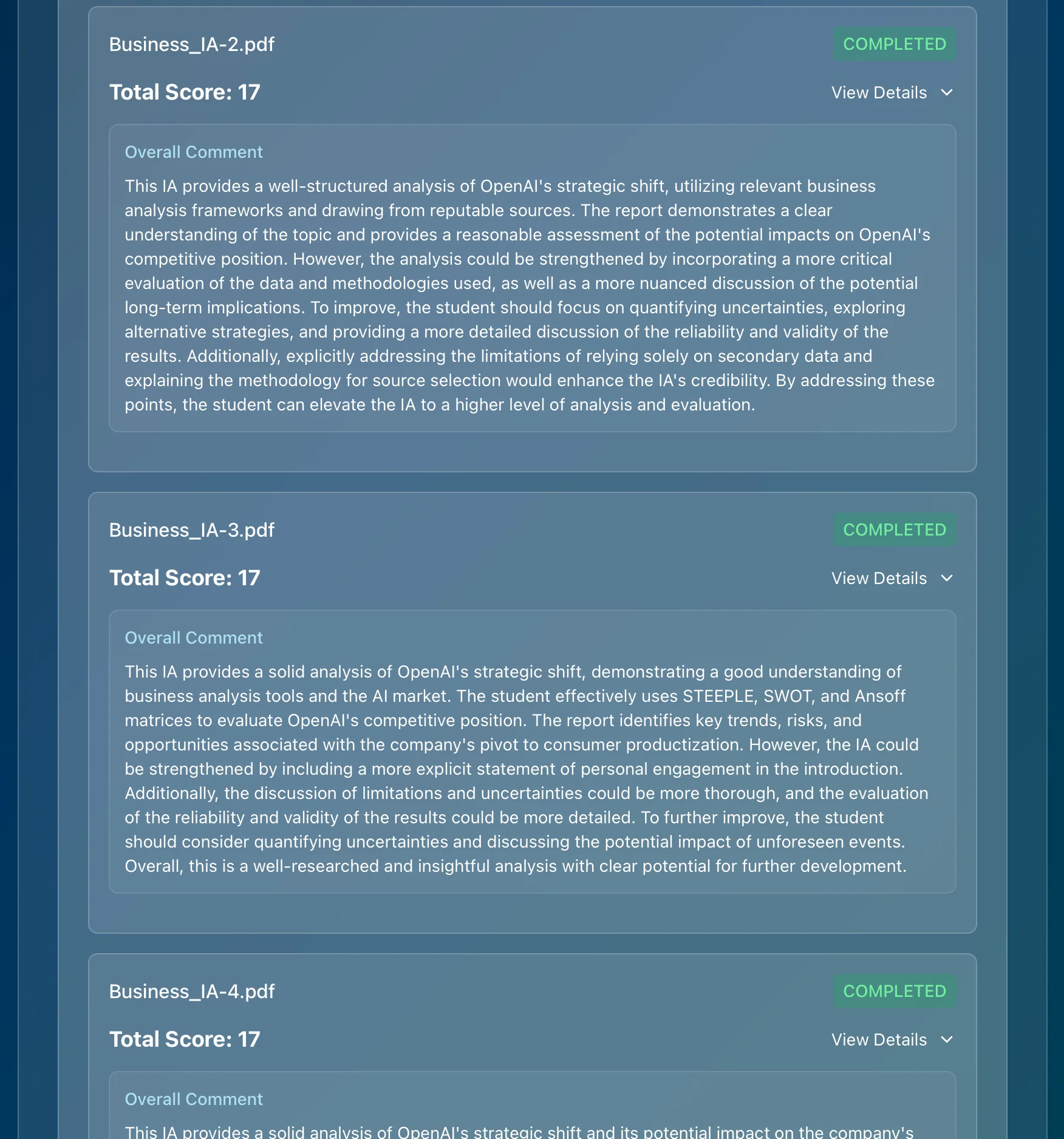
Struggling with IB Assessments?
Get instant, detailed feedback on your work with AI that understands IB criteria.
The revision loop that actually works
Use this 4-step loop:
- Attempt Do one focused set (or one full timed block).
- Review Find exactly where marks were lost.
- Repair Rework those question types with intent.
- Retest Try a similar set and check if the same mistakes are gone.
No loop, no compounding. With loop, your paper practice starts to stack.
How to use Marksy past papers now
You can practice directly in the product:
- Start at Past Papers
- Pick your subject
- Filter by year, session, paper number, and timezone
- Practice question by question or run timed exam-style sessions
- Use feedback to identify your next high-impact fix
This gives you one clean flow instead of juggling PDFs, notes, and scattered trackers.
A weekly structure (realistic and sustainable)
Use this as a default template:
Day 1: Diagnose
- Do one mixed set from your weakest area.
- Write down top 3 recurring errors.
Day 2-3: Repair
- Do short focused drills on those exact error patterns.
- Prioritize method quality and answer structure.
Day 4: Timed run
- Simulate exam conditions on a full section.
- Keep strict timing.
Day 5: Post-run review
- Score honestly.
- Tag mistakes by type:
- concept gap
- method gap
- misread command term
- time-pressure collapse
Day 6-7: Retest
- Do a similar paper set.
- Compare error tags with the previous run.
If the same tags keep showing up, your revision is still too broad.
Subject-specific advice that helps immediately
Math
- Track method failures, not just final-answer errors.
- If timing breaks your process, reduce set size and increase quality.
Sciences
- Mark where your explanation lacks precision.
- Prioritize command terms and scientific wording under pressure.
Essay-heavy subjects
- Practice argument structure and evaluation quality deliberately.
- Compare answers against what earns top-band marks, not average responses.
Pro Tip: Get AI-Powered Grading
Stop second-guessing your grades. Get instant feedback aligned with official IB rubrics.
Should you do full papers or question drills first?
Short answer: question drills first, timed full runs second.
Why:
- Drills fix technique faster.
- Full runs test stamina and decision-making.
Use both, but in that order when you are trying to climb quickly.
What to track after every paper
Keep one lightweight tracker with:
- Paper attempted
- Score/result
- Top 3 lost-mark reasons
- One fix for next session
This is enough to keep your revision honest.
Final takeaway
Past papers are still the highest-value exam resource. But they only work at full power when paired with fast feedback and deliberate repetition.
If you want your revision to compound:
- Practice with intent
- Review precisely
- Retest on similar question styles
Start your next cycle here: IB Past Papers on Marksy